Sex Steroid Hormone Biosynthesis and Action
Testicular Androgens:
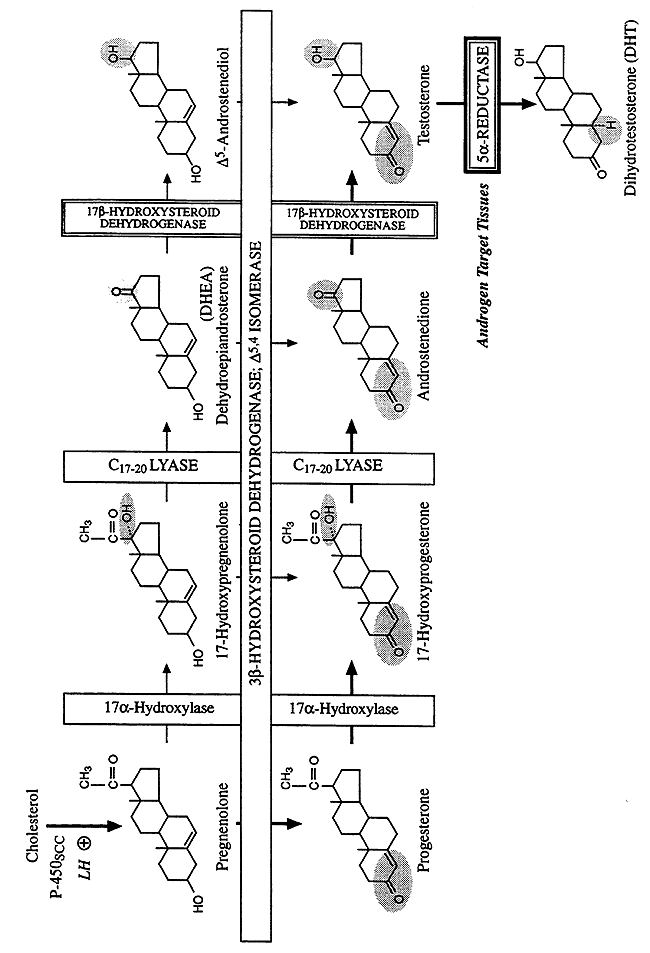
The conversion of pregnenolone to testosterone requires the action of 5 enzymes , all found in the ER of the testes cells.
The conversion of pregnenolone to testosterone is referred to as the "Progesterone Pathway":
(1) 17a-Hydroxylase
(2) C17,20 Lyase
(3) 3b-Hydroxysteroid Dehydrogenase (3b-OHSD)
(4) D5-D4-Isomerase
(5) 17b-Hydroxysteroid Dehydrogenase (17b-OHSD)
Adrenal Androgen (Testosterone) Biosynthesis:
Dihydrotestosterone (DHT), is the most potent androgen, it is formed from testosterone, by the reduction of the A ring through the action of the enzyme 5a-Reductase.
The testes also produce 17b-estradiol, the female sex hormone in small amounts, but most of the estrogens produced by the male are derived from peripheral aromitzation of testosterone.
Actions of the Testicular Hormones:
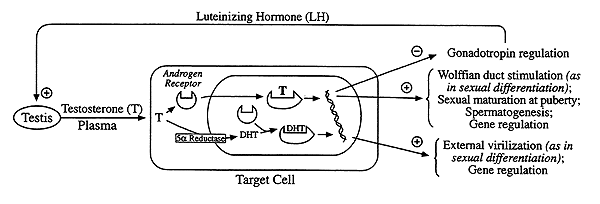
The androgens, principally testosterone and DHT, acting through nuclear receptors are involved in:
(1) sexual differentiation
(2) spermatogenesis
(3) development of sexual organs
(4) anabolic metabolism and gene regulation
(5) male pattern behavior
. During the initial stages of gestation, the development of male and female embryos is indistinguishable.
. At about day 56, hormones become involved.
. All embryos spontaneously develop into phenotypic females in the absence of a Y-chromosome induced event.
. A male specific gene has been detected in mice which is associated with differentiation of the primitive gonad, and lies within the sex determining region (sry) of the Y chromosome.
. When the sry gene is injected into XX female embryos, normal male mice develop.........
Ovarian Sex Steroid Hormones:
Biosynthesis of Estrogens:
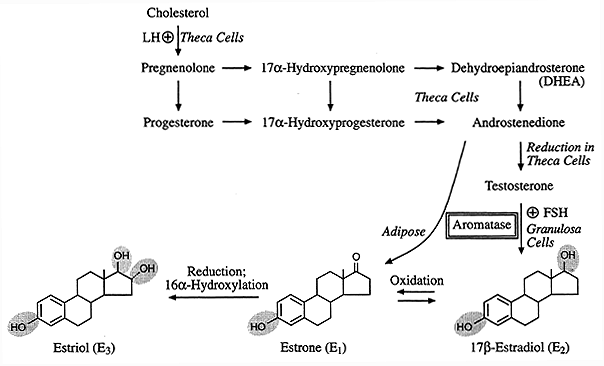
The ovaries are bifunctional organs that produce both estrogens and progestins.
The most active naturally occurring hormones of these classes are 17b-estradiol (E2) and progesterone.
Functions and Biochemical Actions of the Ovarian Hormones:
Female sex steroids act through nuclear receptors to:
(1) Mature primordial germ cells.
(2) Develop tissues for implantation of the blastocyst (fertilized egg).
(3) Provide "hormonal timing" for ovulation.
(4) Establish the milieu required for maintenance of pregnancy.
(5) Provide hormonal influences for parturition (child birth) and lactation.
Synthetic Agonists and Antagonists of Estrogens and Progestins:
Several synthetic compounds have estrogenic activity.
Most modifications were designed to resist hepatic metabolism so that the compounds can be taken orally.
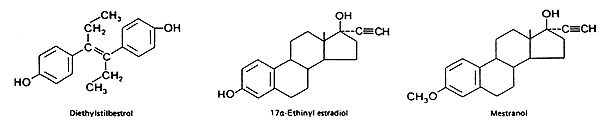
. 17a-Ethinyl Estradiol and Mestranol are used in oral contraceptives.
. Numerous compounds with antiestrogenic activity have been synthesized.
. These antagonists act by competing with estradiol for its intracellular receptor, causing the receptor to assume an inactive conformation.
. Nafoxidine and Tamoxifen combine with the estrogen receptor to form stable but inactive complexes ---> inhibiting the action of estradiol for prolonged periods.
. These antagonists are used in the treatment of estrogen-dependent breast cancer and in breast cancer prevention.
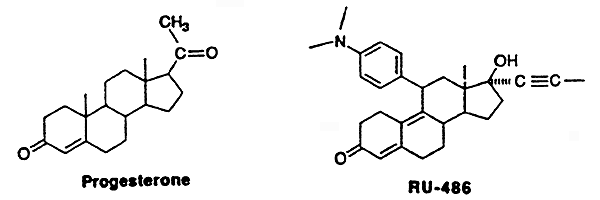
. A progesterone antagonist, RU-486 (the "Morning After Pill"), functions to block the positive effects of progesterone in supporting pregnancy.
Clinical Correlates:
Cancer and Estrogen Receptors:
. Hormonal stimulation is known to be a factor in the development and growth of breast carcinomas.
. By assaying for the estrogen receptor in tumor biopsies, a strong positive correlation was found between the presence of the receptor and the estrogen dependency of the tumor.
. Patients with estrogen receptor in their tumors respond well to ablation of the ovaries, while receptor negative cases must be treated by other means.
. A positive assay indicates that removal of the ovaries will deprive any metastatic cells of estrogen and prevent their proliferation.
. Tamoxifen can also be given as an antagonist.
Osteoporosis:
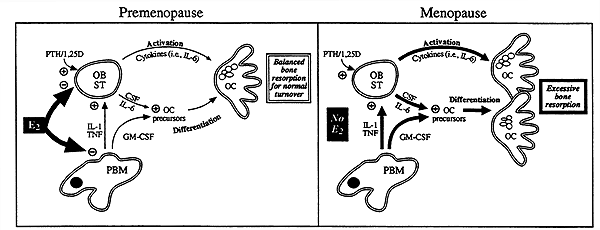
Estrogen acts directly on osteoblasts to increase their proliferation and to keep them in balance with the bone resorbing osteoclasts, and to attenuate the release of cytokine factors that stimulate osteoclasts.
Osteoclast: Bone Resorbing
Osteoblast: Bone Regenerating
Estrogens Prevent Osteoporosis By:
1) Curbing peripheral blood cell release of cytokines (like IL-1) which would normally stimulate osteoblasts to release osteoclastic activating cytokines like IL-6.
2) Blocking the action of PTH and 1,25(OH)2D3 which stimulate the osteoblastic secretion of cytokines (IL-6 etc) that cause osteoclastic differentiation and activation of existing osteoclasts.
The Result: the balance is tipped in favor of the osteoblast over the osteoclast.
Estrogen Regulates Bone Cell Cytokines:
OB = osteoblast
OC = osteoclast
TNF = Tumor Necrosis Factor
CSF = Colony Stimulating factor
PBM = Peripheral Blood Monocyte
© Dr. Noel Sturm 2015