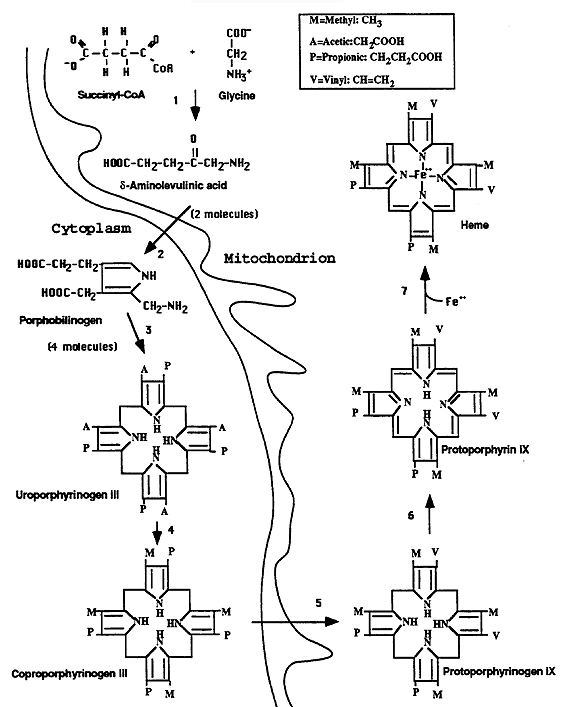
Heme Metabolism
Heme: The iron containing prosthetic group found in a number of proteins such as hemoglobin, myoglobin, cytochrome P-450.
Function: binding O2, electron transfer, oxidation reactions.
Heme Synthesis:
[1] d-Aminolevulinate (ALA) Synthetase: committed, regulated step
Co-factor: pyridoxal phosphate
[2] ALA Dehydratase: eight subunits, sulfhydryl containing
Co-factor: zinc, inhibited by heavy metals like lead
[3] Uroporphyrinogen I Synthase and Uroporphyrinogen III Cosynthase: act in concert
[4] Uroporphyrinogen Decarboxylase
[5] Couroporphyrinogen Oxidase
[6] Protoporphyrinogen Oxidase
[7] Ferrochelatase. Chelation of Fe+2 (ferrous) to the heme prosthetic group.
Inhibited by: lead or iron deficiency.
Regulation:
Heme synthesis is regulated precisely to meet the needs of heme containing proteins (globins).
Feedback Regulation by Heme:
Heme itself inhibits d-ALA Synthetase via repression (genetic) along with diminished transport of Coproporphyrinogen III from the cytosol to mitochondria and stimulates the synthesis of the protein part of hemoglobin/myoglobin (the globins).
Clinical Correlate:
Genetic deficiencies of each of the enzymes in the heme synthetic pathway have been described and result in diseases known as "porphyrias".
Most of the intermediates in the pathway are photoreactive due to their unsaturated, cyclic structures this results in extreme photosensitivity and neurologic dysfunction (toxicity).
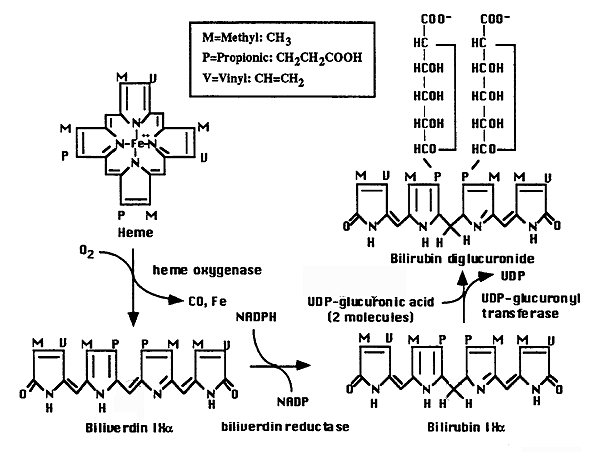
Heme Metabolism:
Heme proteins are constantly synthesized and degraded.
The major source of heme is hemoglobin found in RBC's.
When the RBC end its life after 120 days the hemoglobin molecule is degraded.
The amino acids from the globin and iron are recycled while the porphyrin is degraded.
Bilirubin is the end product of heme metabolism.
Bilirubin: is yellow, water insoluble and highly toxic.
Bilirubin is transported bound to albumin in the plasma to the hepatocyte (liver).
In the hepatocyte it is conjugated to two molecules of glucuronic acid ---> hydrophilic.
Heme Metabolism:
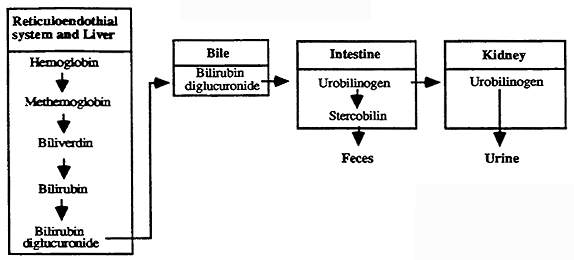
Post Hepatic Metabolism:
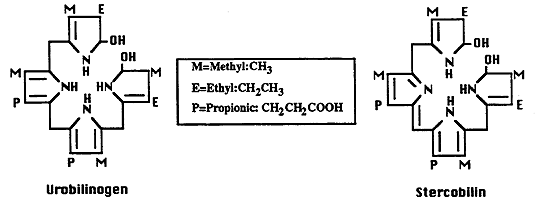
Urobilinogen and Stercobilin
Clinical Correlate:
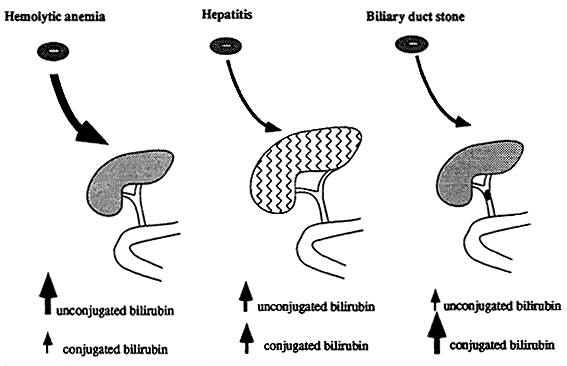
The Van den Bergh Test- measures levels of conjugated and unconjugated bilirubin via coupling of bilirubin with diazonium salts to produce colored azo dyes.
Conjugated Bilirubin (Bilirubin Diglucuronide): water soluble, reacts immediately with diazonium salts ---> Direct Reaction ---> "direct hyperbilirubinemia" ---> Liver Fully Functioning
Unconjugated Bilirubin (Bilirubin): water insoluble, must be extracted with EtOH prior to reaction with diazonium salts ---> Indirect Reaction ---> "indirect hyperbilirubinemia" ---> a lot of Heme Metabolism
"Mixed" signifies elevation in both (Liver is "sick".......).
Jaundice: term used clinically to describe the yellow color seen in hyperbilirubinemia and is due to deposits of bilirubin in the skin and conjunctiva.
Hemolytic Anemia ("Indirect"), Hepatitis ("Mixed"), Biliary Duct Stones ("Direct")
Newborn Jaundice: during the first week of life
Production of Bilirubin-UDP Glucuronyltransferase is physiologically delayed in most newborn infants.
Unconjugated bilirubin (photosensitive) is deposited in the skin.
Irradiation with blue light ---> photolysis of unconjugated bilirubin to water soluble products.
The capacity of the liver to conjugate bilirubin increases rapidly during the first few days of life and most infants are no longer jaundiced by the second week of life.
© Dr. Noel Sturm 2015